


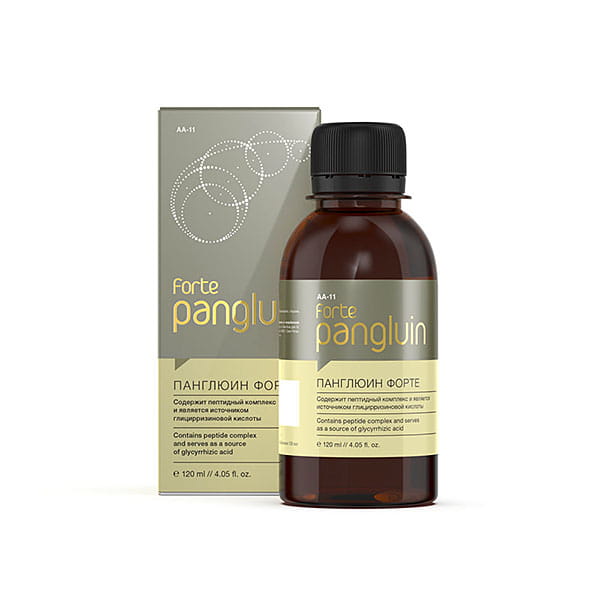
Pangluin Forte
category: natural peptide
barcode:
packing: 120 ml
Pancreatic peptide AA-11 with a twelve-botanical complex - liquid concentrate, 120 ml
Pangluin Forte® contains a unique formula pairing the pancreatic tetrapeptide AA-11 (pancragen) with concentrated rosehip juice and twelve plant extracts traditionally used in nutritional programs that support metabolic processes. The formulation is built around a single organ. Everything in the bottle either works on the pancreas directly or reduces the load it carries.
The peptide is the newer part of the story. AA-11 is a tetrapeptide - Lys-Glu-Asp-Trp, four amino acids in sequence with tissue-specific activity toward pancreatic cells. It supports intracellular metabolism, participates in the regulation of cell renewal and differentiation, and supports the normal functional activity of the organ. Short peptides work at very low concentrations precisely because they are signals rather than substrates; the body reads them rather than burning them.
The botanical side is considerably older, and reading the ingredient list is a bit like walking a hedgerow in late summer. Rosehip, nettle, calendula, yarrow, centaury, bilberry, St. John's wort - these are meadow and field-margin plants, the kind that turn up in every regional herbal ever compiled. Yarrow carries the genus name Achillea after the warrior said to have dressed wounds with it. Centaury takes its name from Chiron, the centaur of the old stories who was supposed to know every plant worth knowing. Bilberry acquired a reputation during the Second World War for sharpening night vision in pilots, since the berry's anthocyanins are genuinely interesting for the small blood vessels.
Three of the extracts belong to a category that deserves explanation, because it is one of the more elegant mechanisms in digestion. Calamus root, centaury, and yarrow are bitters. Their active compounds: acorin, gentiopicrin, and achilleine, act on bitter taste receptors in the mouth and stomach, and that signal alone triggers a reflex increase in digestive secretion - gastric juice, bile, pancreatic enzymes. Nothing is absorbed to make this happen. The body simply responds to the taste, the way it has for as long as people have been eating plants. Better upstream digestion in the duodenum means the pancreas has less compensating to do.
FIELD OF APPLICATION:
- support of normal carbohydrate metabolism as part of a balanced diet
- support of the functional condition of the pancreas
- an unbalanced or irregular diet, as part of comprehensive nutritional support
- periods of increased physical and mental demand
- support of the body's antioxidant defenses
- support of the balanced condition of the vascular system
- incomplete digestive secretion and sluggish bile flow
- heaviness after meals and irregular appetite
- an additional dietary source of glycyrrhizic acid
- maintenance of overall wellbeing and energy level
BENEFITS:
The formulation supports normal carbohydrate metabolism as part of a balanced diet and supports the functional condition of the pancreas. Around that core sit three supporting layers. First, antioxidant defense: rosehip contributes ascorbigen, a bound form of vitamin C, alongside flavonoids, while grape skin supplies resveratrol and proanthocyanidins that inhibit lipid peroxidation in cell membranes, relevant because pancreatic β-cells and acinar cells are unusually exposed to oxidative load. Second, the vascular network: bilberry anthocyanosides and gotu kola asiaticoside act on capillary walls and basement membranes, and an organ as metabolically demanding as the pancreas depends entirely on the quality of its microcirculation. Third, the digestive environment around it: licorice and calendula for the mucous membranes, yarrow and calendula for bile flow, nettle for elimination and blood oxygen transport.
What holds this together is a fairly old idea, and one worth stating plainly: an organ is not repaired in isolation. Support the tissue directly, feed its blood supply, calm the inflammation around it, and reduce the work it has to do, and you have addressed the same problem from four angles instead of one. That is what a twelve-plant formula with a peptide at its center is actually for.
ACTIVE COMPONENTS:
peptide complex AA-11 [ Lys-Glu-Asp-Trp (NH2), pancragen ], rosehip juice, extract of liquorice roots (Glycyrrhiza glabra), extract of St. John's wort herb (Hypericum perforatum), extract of rosehip fruit (Rosa canina), extract of calamus roots (Acorus calamus), extract of nettle leaves (Urtica dioica), extract of calendula flowers (Calendula officinalis), dry extract of bilberry fruit (Vaccinium myrtillus), dry extract of gotu kola herb (Centella asiatica), dry extract of grape skin (Vitis vinifera), extract of yarrow herb (Achillea millefolium), extract of centaury herb (Centaurium erythraea).
PACKING:
120 ml bottle / product: Pangluin Forte / Non-GMO. Not a medical drug.
* Do not exceed the stated recommended daily dose.
** This product is not intended to diagnose, treat, cure, or prevent any disease.
The botanical complex at a glance
Plant extracts and their key phytonutrients
| Plant | Key compounds | Contribution |
|---|---|---|
| Rosehip Rosa canina | Ascorbigen Flavonoids | Antioxidant defence; vascular wall strength; microcirculation |
| Liquorice Glycyrrhiza glabra | Glycyrrhizic acid Flavonoids | Anti-inflammatory action; protection of digestive mucous membranes |
| St. John's wort Hypericum perforatum | Hyperforin Hypericin | Neurotropic action; smooth muscle tone; pancreatic juice outflow |
| Calamus root Acorus calamus | Acorin (bitter) Essential oils | Stimulates digestive secretion and bile production |
| Nettle Urtica dioica | Chlorophyll Vitamin K Silicon | Elimination of metabolic products; blood rheology; tissue oxygenation |
| Calendula Calendula officinalis | Carotenoids Flavonoids | Anti-inflammatory; mild antispasmodic; gentle choleretic action |
| Bilberry Vaccinium myrtillus | Anthocyanosides Neomyrtillin Tannins | Carbohydrate metabolism support; capillary and basement membrane integrity |
| Gotu kola Centella asiatica | Asiaticoside | Microcirculation; collagen synthesis; vascular elasticity |
| Grape skin Vitis vinifera | Resveratrol Proanthocyanidins | Membrane stabilisation; inhibition of lipid peroxidation |
| Yarrow Achillea millefolium | Achilleine Chamazulene | Choleretic and antispasmodic action on the hepatobiliary system |
| Centaury Centaurium erythraea | Gentiopicrin (bitter glycoside) | Digestive secretion; normalisation of GI motility and appetite |
Adults: one teaspoon (5 ml) once daily with a meal, on its own or added to another beverage.
Shake before use — natural sediment is normal.
The recommended course is one month and may be repeated 3–4 times per year.

